Our patient stories.
From life-changing breakthroughs to everyday victories, hear how stem cell therapy has given our patients more than just recovery; it has given them their lives back.
Featured Testimonials
Hear how our cellular therapies have changed patients’ lives.
Results: 244

Sam Harrell is a legend in Texas high school football. Between 1994 and 2009, he led Ennis High School to the playoffs for 13 years straight and won three state titles. But then an MS diagnosis changed everything, robbing him of the career he loves. Fortunately, stem cell treatments for MS helped get him off the bench and back to the life and career that he loves.
Sam Harrell began experiencing multiple sclerosis symptoms in 2005. Eventually, his MS symptoms became so bad that he decided to retire from coaching. He discovered a newfound hope when he heard about stem cell therapy as a possible treatment. His stem cell treatments for MS in Panama allowed him to return to coaching and enjoy life as he did before his diagnosis.
Receiving the Diagnosis
Coach Harrell was developing vision problems back in 2005 and losing sight in one of his eyes. A visit to the eye doctor resulted in seeing multiple eye specialists until he finally met with a neurologist. “He did all the other tests and said ‘Yeah, you’ve got MS,’” Harrell said.
Short for multiple sclerosis, MS is an autoimmune disease that causes damage to the nervous system and affects individual patients in different ways. In the case of Coach Harrell, this meant trouble moving and relying on a golf cart during football practice. His condition eventually progressed to where he required a walker just to get around.
As his son, former Green Bay Packers quarterback and current offensive coordinator for Purdue University, Graham Harrell, puts it:
“You see your dad as sort of a superhero or someone that can’t be hurt or sick. Then to watch him get sick and go through a point where he really couldn’t walk. He probably should have been in a wheelchair but was just too stubborn. Seeing him in the hospital and the tough times he went through, it weighed on the whole family.”
As his symptoms worsened, Coach Harrell chose to retire. He describes the experience, saying in 2019:
“I can still remember that day. I didn’t even come to school that morning like I would normally do. I just stayed home and literally just cried. It was like death and I didn’t realize it but it was me that was dying. Not literally, but it was the end of me as the coach. It was the end of me as that person.”
Stem Cell Treatments for MS
Everything changed when Coach Harrell was put in contact with Richard Humphries. Like Harrell, Humphries was a golf coach who had received an MS diagnosis and reached the point that he couldn’t walk at all. However, Humphries was eventually able to return to golfing.
The two met over barbecue and Harrell had to know what caused the change in Humphries. “I don’t know what it is but I want what you’ve got,” said Harrell. That’s how Sam Harrell learned about Dr. Neil Riordan and his pioneering research in stem cell treatments for MS and other health problems.
While he’s based in Southlake, TX, Dr. Riordan is also the founder of Stem Cell Institute in Panama City, Panama. “Panama is unique in that we have a full license from the government to not only manufacture cells but treat people and to do clinical trials,” explains Riordan. “They are very progressive on their regulations for adult stem cells.”
Harrell couldn’t afford the treatments on his own, but the city of Ennis held a fundraiser for his treatment. It took three trips to Panama for him to experience results. As Harrell describes the experience, “I went back the third time,” he says. “I don’t know why the third one was the secret but it all changed after that.”
Dr. Riordan explains the results by saying:
“We just published a study where we treated one time and the majority of people saw improvement without any major side effects. For him [Harrell] it was three times. I hate to generalize with MS because it’s such a very different disease for many people. In his case, it seems like he got the maximum benefits during his third treatment.”
To learn more about stem cell therapy for MS, click here!
Becoming a Stem Cell Advocate
Since his recovery, Sam Harrell has become an advocate and speaker for stem cell therapy. He has spoken with Dr. Riordan about how stem cell treatments for MS gave him his life and career back.
He’s so passionate that he even spoke in front of the Texas State House in a public hearing regarding H.B. 810, a piece of legislation to increase access to stem cell interventions in Texas. It was passed in 2017.
Along with his stem cell advocacy, Harrell has continued coaching and guiding young men on and off the football field.
Do you want to learn more about what stem cell therapy can do for you? Apply for treatment today!
In 2005, high school football coach Sam Harrell began experiencing symptoms of multiple sclerosis. The disease progressed to the point where he could no longer walk without assistance, prompting him to retire. His fortunes changed when he heard about stem cell treatments for MS. He has since returned to coaching and leading his players to victory.
Stem Cell Institute in Panama City, Panama is at the forefront of applied stem cell research. Since our inception in 2006, we have performed over 25,000 procedures, helping thousands of families across the United States and around the world embrace the opportunity for a better life. Our medical team prioritizes the health and well-being of all our patients through top-notch stem cell treatment and care.
Editor’s Note: This post was originally published in February 2019 and has been updated for comprehensiveness.
Arthritis is a persistent companion that fills life with discomfort. Simple tasks become painful, turning daily routines into struggles. Fortunately, stem cell therapy for arthritis may be the solution for you. Many patients have experienced improvements with treatment, finding relief they never thought possible.
Dusty Durrill, a beloved figure in the Corpus Christi, Texas community, suffered from severe arthritis for a decade. His doctors suggested knee and hip replacements and offered no hope for his right hand. Dissatisfied, Dusty explored stem cell therapy abroad. He chose the Stem Cell Institute in Panama, where a non-invasive procedure led to positive results in just a week.
Sadly, Dusty passed away in 2016, but his story continues to inspire many. He left behind a legacy of community service as well as the development of prominent local landmarks. His journey at Stem Cell Institute Panama exemplifies the hope and possibilities that stem cell therapy can offer to those suffering from arthritis.
Watch Dusty’s story below:
Dusty’s Diagnosis
Dusty Durrill joined us in November 2011 to talk about his experience with stem cell therapy for arthritis in Panama. “I’m not involved in medicine and I’m not involved with the [Stem Cell] Institute,” he explained. “I’m just a separate businessman that happened to end up down there.”
In his late 70s at the time of the video, Dusty struggled with arthritis continually for a decade. He had been taking glucosamine and chondroitin to deal with the pain—popular supplements for treating osteoarthritis.
“I finally ran out of steam to where I was stooped over and my knees weren’t working. I was slipping around and obviously in pain. My right hand was totally gone. I had to shake hands with my left hand and keep my right hand behind my back because I couldn’t allow anyone to touch it. I could see that I was going to be using a walker in about a year.”
Dusty got X-rays of his hips and legs to see if anything could be done. According to his doctors, his only option was to replace both knees due to not having any cartilage left. He would also have to have his hips replaced in fewer than two years. For his right hand, Dusty was informed that nothing could be done, “It’s just gone. You don’t have it anymore.”
Discovering Stem Cell Therapy for Arthritis in Panama
Dusty wasn’t satisfied with his doctors’ prognosis. “I had a back operation about 20 years ago and it took me nine or 10 months to recover,” he explained. He didn’t have fond memories of that experience and didn’t want to go through it again.
Fortunately, his girlfriend was knowledgeable about the veterinary field where they’ve been treating arthritis in dogs with stem cells for years. “We can fix arthritis in dogs but not humans?” Dusty asked.
“Well, this didn’t ring the right bell. Veterinary medicine is a proving ground in this country. We are a great country. We have the most freedom of speech, freedom of opinion, expression, and movement. This didn’t ring a bell.”
Dusty was motivated to find another solution to knee and hip replacement surgery. He learned about clinics outside of the United States that specifically provide stem cell therapy for arthritis. Over time, he realized that there were vast differences in reputation between clinics. “I found them in Europe, Asia, and Central America,” he said. “So I started calling them and I got some really good answers and some really measly answers.”
This all changed when he found Stem Cell Institute in Panama:
“I called Panama and they were professional and they asked good questions. They wanted to know my health and age—everything to see whether I was a candidate or not. So we decided we’d go to Panama to see what they had to offer. They told me they could help me but that it would take three to six months to see the results. I said, ‘Okay let’s get it on’ so we got it on.”
Dusty’s Experience with Stem Cell Institute in Panama
Dusty described getting stem cell therapy for arthritis in Panama as “a lot like going to the blood bank. I never was hospitalized. There was no surgery or drugs.” He and his girlfriend had planned to stay a week. By the end of that time, he exclaimed, “All my arthritis pain was gone. In seven days. Seven days!”
“I was facing major surgery and major recovery. They [Stem Cell Institute] said that it was unusual for [results] to come that quickly but in seven days I was cured. I was taking 17 pills a day before I went to Panama. Now I take zero. I got my hand back, my legs back, my life back. Thank you all.”
Are you interested in stem cell therapy for your arthritis? Click here to apply today!
For ten years, Dusty Durrill endured crippling arthritis. Medical professionals advised knee and hip replacements, with no optimism for his right hand. Dissatisfied, he sought out stem cell therapy overseas. Opting for treatment at the Stem Cell Institute in Panama, a minimally invasive procedure yielded remarkable progress within a mere week, restoring his mobility and retaking control of his life.
Stem Cell Institute in Panama City, Panama is at the forefront of applied stem cell research. Since our creation in 2008, we have performed over 50,000 procedures, helping thousands of families across the United States and worldwide embrace the opportunity for a better life. Our medical team prioritizes the safety, health, and well-being of all our patients through top-notch evaluation and care.
*This post has been updated since it was originally published in December 2012 for clarity and comprehensiveness
*Note: Since our inception almost 20 years ago, we pioneered the use of stem cells from cord blood, bone marrow, and fat for a variety of chronic conditions. However, we no longer use stem cells derived from any of these sources at Stem Cell Institute Panama. Since 2015, we have only treated patients using specially-selected human umbilical cord mesenchymal stem cells (hUCT-MSCs) known as Golden Cells™. Our Golden Cells™ were discovered through years of treating thousands of patients to identify the cell lines associated with highly successful cases. They are more robust than other types of stem cells, which provides our patients with the opportunity for optimal outcomes.
Juliana discussed the improvements her daughter has made over the past year and a half after undergoing 2 stem cell clinical protocols at the Stem Cell Institute in Panama City, Panama.
“The changes have been extremely positive and obvious. After my daughter’s first treatment in January 2010, her tantrums diminished. She could transition from one activity to another without throwing a tantrum. She had more self-control. After the second treatment in June 2010, she was in contact more with her surroundings; as if a veil had been lifted. She was surprised, happy and wanting to be with her friends. Her social interaction improved. Before, she was very isolated. After she returned to school following her second treatment, she was able to do “show and tell” for the first time ever. Now she welcomes other children and wants to be part of the group. Her speech is improving. Now she can express to others what she wants.”
[fusion_youtube id=”AB6_dz7JjAw” alignment=”center” width=”” height=”” autoplay=”false” api_params=”&rel=0″ hide_on_mobile=”small-visibility,medium-visibility,large-visibility” class=”” /][fusion_separator style_type=”none” hide_on_mobile=”small-visibility,medium-visibility,large-visibility” class=”” id=”” sep_color=”” top_margin=”10″ bottom_margin=”10″ border_size=”” icon=”” icon_circle=”” icon_circle_color=”” width=”” alignment=”center” /]
Donna: Hi, I’m Donna McCairn and this is my son…
James: James
Donna: And how old are you James?
James: 14 years old, 15…
Donna: Yeah, 15 in February. So, we came to Stem Cells last September and since then, the changes we’ve seen in James is that his math has really improved. For the first time he got two B’s at the end of last year for school. And then this year he had a target to get 70% mark by June of this year, but he actually got it when, James?
James: This month – for math.
Donna: For your test? And what have you noticed with the stem cells? What things have you found easier?
James: My daily life.
Donna: Such as?
James: Getting ready for school.
Donna: And what about your homework?
James: I’m completing my homework on time.
Donna: And so what we found at home is James is being more self-directed so instead of coming home and struggling to get through all the homework, he’s come home and sort of had that forward awareness where, “I’ve gotta get my homework done because it’s due tomorrow,” and sitting down and starting his homework unassisted, which has been a huge change. And what about with other people? What changes have you felt?
James: I’m talking to more people.
Donna: And are you less shy or more shy?
James: Less shy.
Donna: Ugh Huh. And what happened on this trip to Panama?
James: I made some friends.
Donna: It’s a first. As all the parents know, making friends is the hardest thing, isn’t it?
James: Yeah
Donna: Yeah. Reading people is really tricky. So with our home life, with his siblings, there’s been less arguing, more being friendly, more being able to reason, just not getting so uptight and blocked. He can understand others rather than being self-orientated and only interested in what he needs and getting frustrated. He’s starting to see his sisters’ point of view, But… They’re still not right are they?
James: Um, Hmm. (laughing)
Donna: And it’s those little things. So. James likes to be driven to school, but when I say, “No, you gotta go catch the bus,” he normally would have resisted and waited and waited, but what I’ve notice between the last stem cell visit and this visit is the ability for him to reason, “Okay, mom’s not going to drive me to school today. I just have to get ready and go.” Whereas before, he’d just wait, and just wait until someone just gave in, or at least walked him to the bus stop to get the bus. And what about coming home from school on your own on the bus?
James: I’m more happy.
Donna: And what about walking with the other boys?
James: I talk to them more.
Donna: And do you sometimes walk and get off the bus with the other boys and come the other way?
James: Yeah
Donna: So, it’s like he can get off at a stop where boys from his school get off together, and that’s a very new thing to go, “Oh, I need to be…” We all said, “You need to be in a group. You need pals.” What are you nudging me for? What’s the best thing about coming to Stem Cells?
James: The people and it doesn’t hurt. Oh, bringing your parents.
Donna: No, No, not parents. Being on holidays…
James: With mom.
Donna: Exactly! Being on holidays with mom. So if you want a great holiday, leave the kids. Leave the husband. Just come with your boy.
[fusion_youtube id=”cyJO2XBWqII” alignment=”center” width=”” height=”” autoplay=”false” api_params=”&rel=0″ hide_on_mobile=”small-visibility,medium-visibility,large-visibility” class=”” /][fusion_separator style_type=”none” hide_on_mobile=”small-visibility,medium-visibility,large-visibility” class=”” id=”” sep_color=”” top_margin=”10″ bottom_margin=”10″ border_size=”” icon=”” icon_circle=”” icon_circle_color=”” width=”” alignment=”center” /]
Hi. My name is Jennifer and I’ve been diagnosed with multiple sclerosis (MS) since 2003. I started coming to the Stem Cell Institute last year, 2017, in January. My second treatment was in August of last year and now I am here for my third treatment [May 2018].
“I feel strongly that I wouldn’t be where I am here today. I would have been in a wheelchair.”
From my first treatment, I saw major improvements as far as being able to stand without wobbling or bouncing back and forth. I also can feel my toes. I also have more bladder control. The second treatment, I didn’t really see much improvement like I did the first. The first was major. But now I am here for my third and I’m trying to go within six to seven, eight months the most in between my treatments until I see, let’s say 70% improvement.
So, thank you and I support the Stem Cell Institute, and I feel strongly that I wouldn’t be where I am here today. I would have been in a wheelchair.
Tony Robbins received stem cell therapy in Panama to address health issues. He now promotes the treatment and even co-authored a book about what he’s learned. This has sparked growing interest in the efficacy and accessibility of stem cells.
Tony Robbins sought alternatives to surgery for his health problems. This led him to stem cell therapy and visiting Panama’s Stem Cell Institute in 2018. He now praises stem cells’ potential to transform healthcare and longevity. Our Golden Cells™ enhance outcomes, earning acclaim from Robbins and others.
Tony Robbins Receives Stem Cell Therapy in Panama

Tony Robbins discovered stem cell therapy when faced with serious medical issues. His doctors told him that surgery with a six-month or more recovery period was the only option. Unsatisfied with the prospect of slowing down, Robbins began looking for an alternative
His research led him to stem cell therapy in Panama at Stem Cell Institute. He shared his feelings about the treatment via Instagram in 2018, writing:
“Feeling absolutely invigorated after our trip to Panama this weekend, where I received the transformative benefits of stem cell therapy! Our huge thanks and honor to all the doctors and the bright, caring medical staff at the state-of-the-art Stem Cell Institute in Panama City, Panama . Stem cells saved my shoulder after struggling with excruciating pain from spinal stenosis and, more recently, a torn rotator cuff. Stem cell treatment is truly a next-level health innovation that can reverse the wear and tear we put on our bodies and prevent debilitating disease and injury from escalating further . This technological advancement will impact humanity in life-changing ways— it has the potential to transform and save MILLIONS of lives! I’m so grateful to be a recipient of this life-changing medical treatment!
It was a beautiful few days as always — thanks, Panama ✈️.”
Tony Robbins Continues His Journey with Stem Cell Treatment in Panama
Tony Robbins’ 2018 visit for stem cell therapy at Stem Cell Institute in Panama wouldn’t be his last. Having experienced the benefits of stem cell treatment, he visited us again in 2019.
“I’ve shared before that stem cells worked wonders for my shoulder after struggling with excruciating pain and doctors telling me there was no other option other than rotator cuff surgery and a long rehab and recovery,” Robbins shared in an Instagram post. “Stem cell treatment is a next-level medical solution with the potential to make a massive impact on human health and longevity. It truly has the potential to save MILLIONS of lives!”
His experiences with Stem Cell Institute led him to write one of his latest books, Life Force: How New Breakthroughs in Precision Medicine Can Transform the Quality of Your Life & Those You Love. Co-authored with Peter H. Diamandis and Robert Hariri, the book sheds light on how stem cell therapy in Panama may help fight:
- Illness
- The effects of aging
- Life-threatening diagnoses
Tony Robbins learned first-hand the power of stem cell treatment and what it’s capable of. Now he wants you and the rest of the world to know about it, too!
Read Dr. Riordan’s Book to Learn Even More About Stem Cells

“Neil takes readers on a riveting journey through the past, present and future of stem cell therapy. His well-researched, educational and entertaining book could change your life. I highly recommend it.” – Tony Robbins, NY Times #1 Bestselling Author
Neil H Riordan, PA, PhD, is the author of MSC: Clinical Evidence Leading Medicine’s Next Frontier. It’s considered the definitive textbook on clinical stem cell therapy.
In this book, Dr. Riordan brings you an easy-to-read book about:
- How stem cells work
- Why they work
- Why they’re the wave of the future
His Golden Cells™ are the culmination of his work in applied stem cell research. They represent a breakthrough in the field of regenerative medicine. The unique molecular signature of these stem cells is associated with some of the best outcomes observed within our clinic over the years for a variety of chronic diseases and medical conditions, including autism.
Established in 2006, Stem Cell Institute in Panama stands as a beacon of excellence. We have conducted over 50,000 stem cell procedures for patients from all over the globe. Our commitment to your welfare underscores every aspect of our operations. It ensures top-tier care and treatment as you seek a pathway to improved health and vitality.
We leverage Golden Cells™ to offer our patients the best chances for successful therapeutic outcomes. Studies have concluded that mesenchymal stem cells, of which Golden Cells™ are a special subset, have the remarkable ability to hone in on sites of inflammation. Once there, they deploy bioactive agents to modulate immune responses and help tissue repair. They act as factories in the body, making therapeutic compounds where they’re needed.
Riordan’s seminal book on stem cell therapy has garnered acclaim from luminaries in the field and beyond. This includes Tony Robbins—renowned author, coach, and philanthropist. Robbins hails Riordan’s work as a captivating exploration of stem cell therapy’s past, present, and future, extolling its potential to revolutionize lives.
For those seeking a path to enhanced health and independence, Riordan’s book serves as an invaluable primer on the transformative power of stem cell therapy.
Are you ready to discover what stem cell therapy may be able to do for you? Click here to apply today!
Tony Robbins explored options beyond surgery to address a torn rotator cuff and spinal stenosis, leading him to discover stem cell therapy. His visit to Panama’s Stem Cell Institute in 2018 highlighted the therapy’s potential to revolutionize healthcare and extend longevity. The institute’s utilization of Golden Cells™ has notably improved treatment outcomes, garnering recognition from Robbins and fellow experts in the field.
Stem Cell Institute in Panama City, Panama is at the forefront of applied stem cell research. Since our inception in 2008, we have performed over 50,000 procedures, helping thousands of families across the United States and worldwide embrace the opportunity for a better life. Our medical team prioritizes the health and well-being of all our patients through top-notch stem cell treatment and care.
*This blog was originally published in May of 2018 and has been updated for clarity and freshness
[fusion_youtube id=”DuXmIZux3cU” alignment=”center” width=”” height=”” autoplay=”false” api_params=”” hide_on_mobile=”small-visibility,medium-visibility,large-visibility” class=”” /][fusion_separator style_type=”none” hide_on_mobile=”small-visibility,medium-visibility,large-visibility” class=”” id=”” sep_color=”” top_margin=”10″ bottom_margin=”10″ border_size=”” icon=”” icon_circle=”” icon_circle_color=”” width=”” alignment=”center” /]
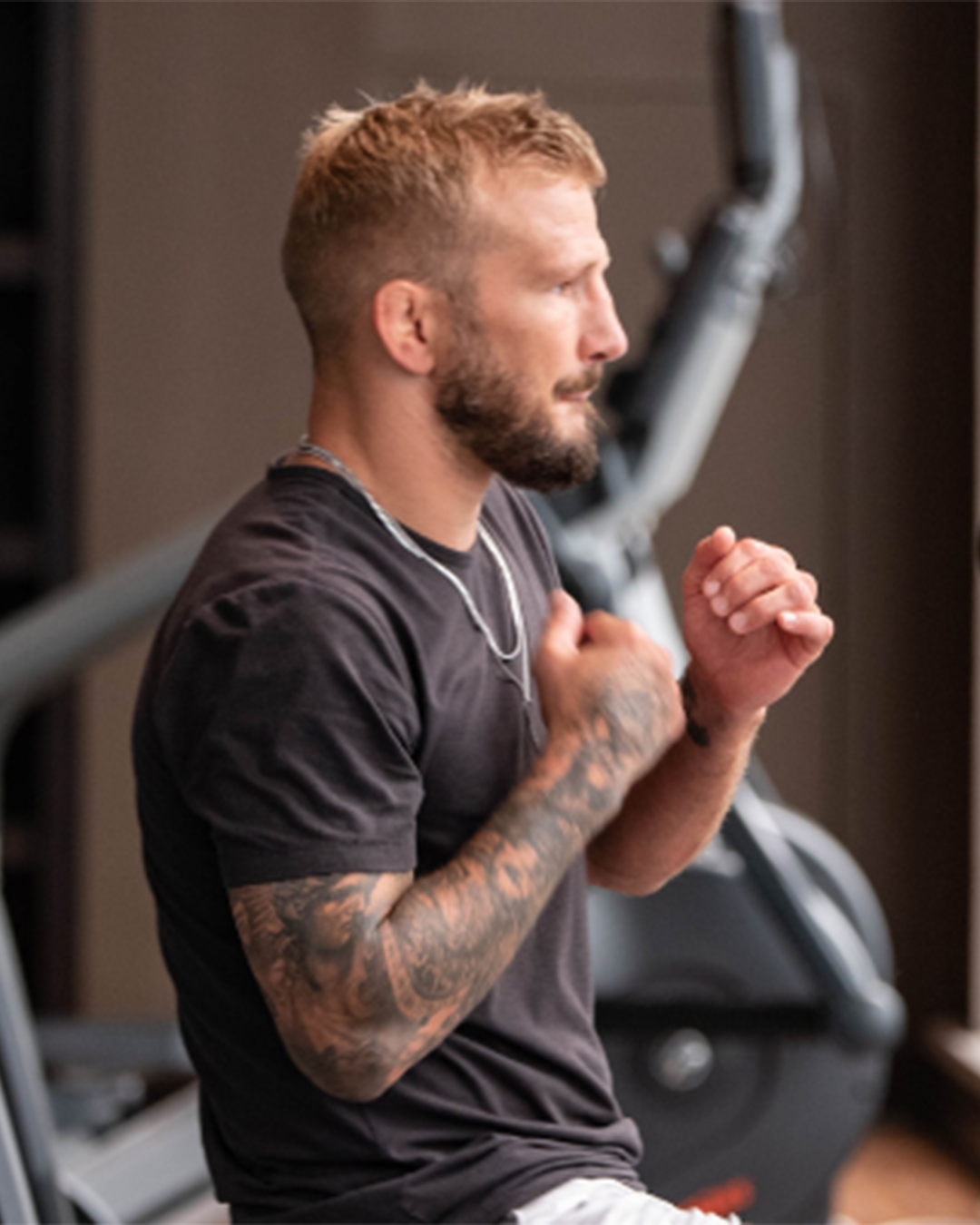
UFC bantamweight World Champion TJ Dillashaw discusses a side effect of his stem cell treatment at Stem Cell Institute in Panama with its founder, Neil Riordan, PA, PhD during dinner in Panama.
Dr. Riordan – I am talking about the last time you were down here.
TJ – I’ve been learning a lot about what the stem cell therapy did for me. Stuff that I didn’t even know it was going to do until I listened to you on the [Joe Rogan] podcast [with Mel Gibson]. And one was it got rid of my psoriasis.
Dr. Riordan – And where was your psoriasis?
TJ – My scalp. I had it for like six years. I thought changing my diet and all this stuff would help it out but I think what really helped it was coming down and getting stem cells.
Dr. Riordan – And how long was it after you got treated that you felt the difference?
TJ – Shoot. I didn’t notice for probably a couple months, I think is when I figured it out. I had it really bad but a couple months later it was completely gone.
Dr. Riordan – Wow.
TJ – I had it for six years, you know? Yeah.
[fusion_youtube id=”_qLkDzonRE0″ alignment=”center” width=”” height=”” autoplay=”false” api_params=”&rel=0″ hide_on_mobile=”small-visibility,medium-visibility,large-visibility” class=”” /][fusion_separator style_type=”none” hide_on_mobile=”small-visibility,medium-visibility,large-visibility” class=”” id=”” sep_color=”” top_margin=”10″ bottom_margin=”10″ border_size=”” icon=”” icon_circle=”” icon_circle_color=”” width=”” alignment=”center” /]
Interview with the parents of Brady B, during his second round of stem cell therapy for autism at the Stem Cell Institute in Panama using *umbilical cord tissue-derived mesenchymal stem cells.
For more information, visit: https://www.cellmedicine.com/stem-cell-therapy-for-autism/
*umbilical cords donated after normal, healthy births
Interview Transcript
Interviewer: Today is December 22nd 2017. Please give your names.
Michele: Steve and Michelle Bacon and this is Brady.
Interviewer: Brady’s diagnosis?
Michele: Brady was diagnosed when he was two and a half with autism.
Interviewer: So, this would be his second stem cell treatment?
Michelle: Umm, hmm.
Interviewer: The first treatment was performed when?
Michelle: April, 2017.
Interviewer: Can you describe his improvements?
Michelle: The first round of stem cells, after the second infusion, we were putting him to bed that night and he said spontaneously, without any requests or anything, us prompting, nothing…his first 3-word sentence. He said, “I want pizza.”
Steve: When Brady was diagnosed he was, or is diagnosed as non-verbal. So that was a complete surprise that he came up with a spontaneous 3-word phrase.
Michelle: And before that, he had only been doing like “echoing” and a lot of it was not understandable to everyone. I mean, we understood because we know him but other people wouldn’t have been able to understand.
Steve: Since stem cells, he’s become more patient and able to wait for things and not have to quick go and do something. He can stand in a line and wait now.
Michelle: He’s more… His school reported that he is more tolerant of transitions, like when they’re transitioning from a preferred activity to, like, work, like a work sheet – school stuff.
Steve: He’s able to read some sight words now since…
Michelle: About 30. Yeah, he can read words now. He wasn’t able to do that before. He can… It started out just recognizing like, from an array of three pictures, and then he would have like, “apple” or “banana” and he’d have a horse and a pencil and a banana and he cold match the word “banana” to the picture. And he would trade out the words and he could correctly identify which word went with which picture. And now, all we need is the flashcard of the word, no pictures, just like “horse” or “yellow”. And he can identify about 30 words. 30 or 40 words.
Steve: And he can now read some simple sentences with the sight words in it that he knows. And this is all new since stem cell treatments.
Michelle: Yeah, a lot more tolerant. Eye contact is better. He seeks out peers to play now whereas he didn’t before. Greetings are better – like “Hi” and “Bye”. Still working on the eye contact though. That one’s still kind of tough. He can look at you in a mirror, do eye contact in a mirror but the face is a little hard still.
Interviewer: Ok, anything else that you’d like to mention?
Michelle: Anything else guys?
Brother: He’s my brother.
Sister: [Inaudible]
Steve: More interactive with peers and family members.
Michelle: He’s definitely more interactive with everyone.
Interviewer: Ok.
Michelle: And no.. Oh yeah! He used to, it was hard always to get him to come out of his room. He would just want to sit in his room and play on his iPad and now he actually comes out and he sits with us a lot more. And he’s a lot more interactive with the family. We used to have a hard time getting him to stay at the table for dinner and now, he stays at the table no problems. He used to have meltdowns that would last 20 or 30 minutes. Now, he turns around in like, a minute. It’s so much better. His temperament is a lot better. I mean, he’s always been a very good boy but he gets rigid about things, you know? If he doesn’t have it just that way, it’s a 20 – 30 minute meltdown – before. Now, it’s much better.
Interviewer: Ok. That’s it. Thank you very much.
Everyone (including Brady): Cheese!